


Anxiety and worry – Why your mind always feels 'on'
There are times in life when your mind feels like it is running faster than you are. You might feel on edge, restless, tense, or unable to switch off. Your thoughts might race, loop, jump, or replay moments again and again. You may catch yourself worrying about things that never used to bother you or feeling overwhelmed by decisions that used to feel simple.
If this sounds familiar, you are not alone. Anxiety, worry and stress are incredibly common, especially when life feels uncertain, busy, or emotionally heavy. Nothing about this makes you weak. It makes you human.
Understanding anxiety can be the first step to finding feeling more settled.
Why anxiety shows up
Your brain is designed to protect you. When something feels uncertain or overwhelming, your brain pays extra attention. It scans for danger, tries to predict what could go wrong, and urges you to prepare.
This is helpful when you are facing real danger, but in everyday life it can become overwhelming.
Your brain can switch into 'alert mode' even when the threat is emotional rather than physical. For example:
- work stress
- relationship tension
- financial pressure
- health worries
- big decisions
- past experiences resurfacing
- general uncertainty.
Anxiety is your body’s way of saying, “I am trying to keep you safe”, even when the situation does not need that level of protection.
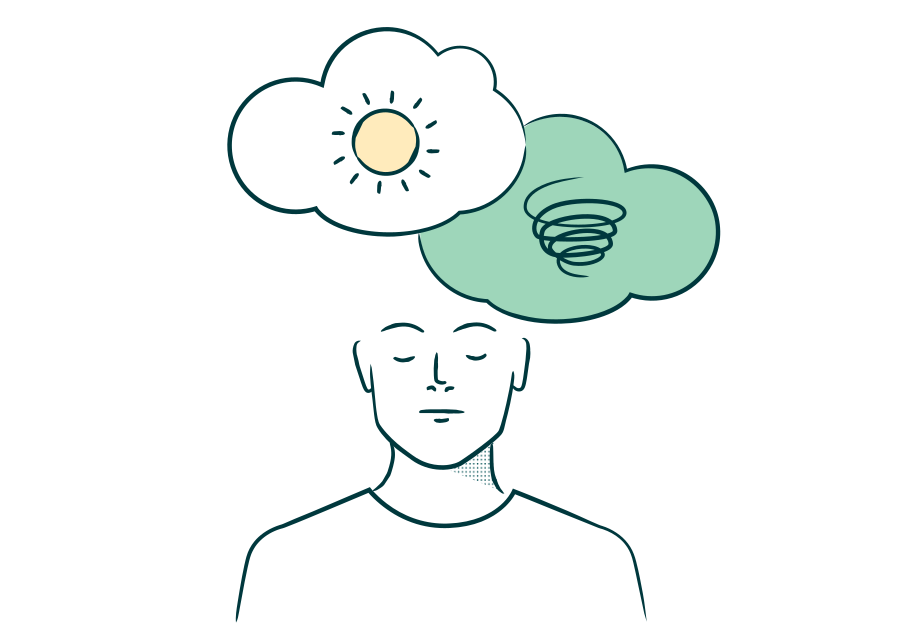
How anxiety and worry feel in your body
Anxiety often shows up physically long before you recognise it mentally. You may notice:
- a tight chest
- a racing heart
- shallow breathing
- a knot in your stomach
- sweaty or shaky hands
- trouble sleeping
- difficulty concentrating
- feeling irritable or restless.
These are normal biological reactions, not personal flaws. Your body is preparing to respond to stress, even if you are not in danger.
When worry becomes a loop
Worry can feel like planning or problem-solving. But after a certain point, it stops being helpful and starts becoming circular.
Your mind may replay thoughts such as:
- "What if I can’t handle this?"
- "What if something goes wrong?"
- "Why can’t I stop thinking about this?"
- "I should be coping better."
These looping thoughts can leave you exhausted. The more you try to control the thoughts, the stronger they can feel.
It is not your fault. This is simply how the mind reacts under pressure.
Why it can feel like you can't switch off
When stress builds up, your internal alarm system becomes more sensitive.
That means:
- small tasks feel big
- small worries feel louder
- decisions feel harder
- your mind jumps ahead to worst-case scenarios
- your body remains tense even when you want to relax.
These are common signs that you’re feeling overwhelmed, not failure.
How to help you settle
When your mind is racing, small grounding moments can help your body settle. You might try:
- taking a slow breath in, and a longer breath out
- noticing your feet on the floor
- looking around and naming five things you can see
- drinking a glass of water
- stepping outside for fresh air
- doing one small task.
These small actions tell your nervous system that you are safe.
Reaching out for support
Anxiety can feel isolating, but there is support available. You don’t need to wait until things get worse to ask for help. You can reach out for help at any time.
You can speak with someone you trust, talk to your GP, call the Medicare Mental Health phone service or visit a Medicare Mental Health Centre.
If you are feeling suicidal, or are in danger, please call 000 or go to your nearest emergency department.

Want more personalised guidance?
Explore our free digital programs, based on a proven approach to help people experiencing low levels of anxiety, stress or general concerns about their mental wellbeing.
You can progress through our evidence-based digital programs either with support from a qualified mental health practitioner (practitioner-guided), or independently (self-guided).
You deserve to feel understood and supported
Anxiety is not a sign of weakness. It is a sign that you have been managing stress, fear or uncertainty for a long time. With the right support and simple, steady tools, it is possible to feel calmer, clearer and more grounded. You do not have to carry this alone.