


When life feels overwhelming
When stress starts to build, it can feel like your mind and body are working against you. Your heart might race. Your thoughts might speed up or get stuck. You might feel tense, foggy, jumpy, or strangely tired, no matter how much you rest. Many people worry that something is wrong when they feel this way.
Understanding what’s happening inside your body during times of stress can help normalise your experience so you can approach your feelings with more compassion and less fear.
What happens when you feel stressed
Your brain’s first job is to keep you safe. When it senses something stressful, it activates a kind of internal alarm. This alarm can be triggered by many things, including pressure at work, family worries, uncertainty, relationship tension, or unexpected changes in life.
The alarm system prepares your body to respond quickly. It does not stop to ask whether the threat is emotional or physical. It simply reacts.
You might notice:
- a tight chest
- a racing or fluttery heartbeat
- a knot in your stomach
- sweaty or shaky hands
- trouble focusing
- feeling restless or on edge.
These sensations are not signs that your body is failing. They are signs that your body is trying to protect you.
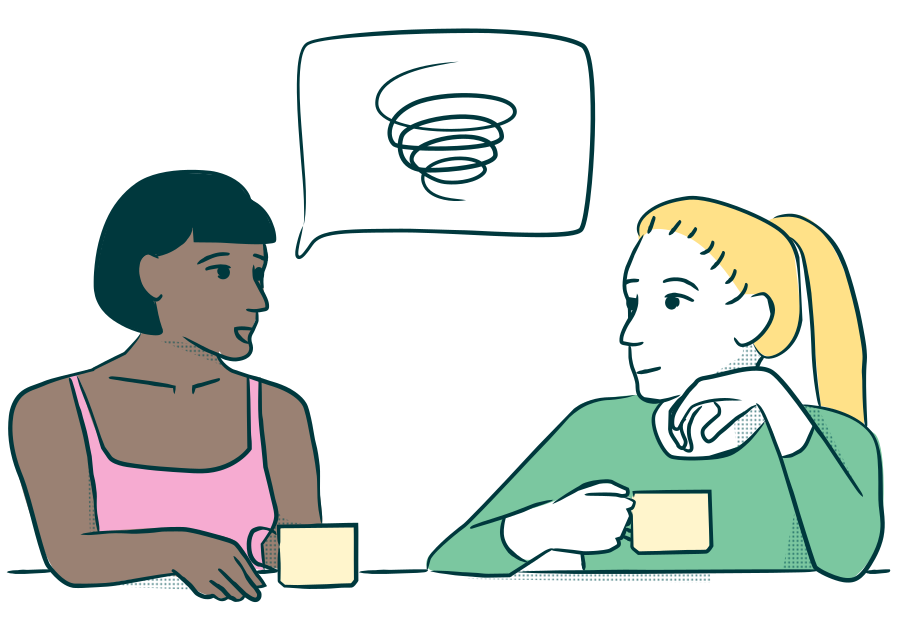
Why stress can feel so intense
If stress continues for a while, your internal alarm becomes more sensitive. This means smaller things can feel bigger than they usually would. Everyday tasks might start to feel heavy or complicated. Minor worries might suddenly feel overwhelming.
This is not your fault. It is your nervous system doing its best with the resources it has.
It can help to remember:
- Your reactions make sense.
- Your body is responding to strain, not imagination.
- You are not weak or overreacting.
- You are not alone in feeling this way.
Why you might feel stuck or unable to cope
When your alarm system is switched on, the part of your brain responsible for planning, problem solving, and thinking clearly becomes less active. This is why stress can make it hard to make decisions, remember things, or take action.
You might notice:
- feeling frozen
- avoiding tasks
- overthinking small details
- finding simple things surprisingly hard
- feeling disconnected or flat.
These are natural reactions that many people experience.
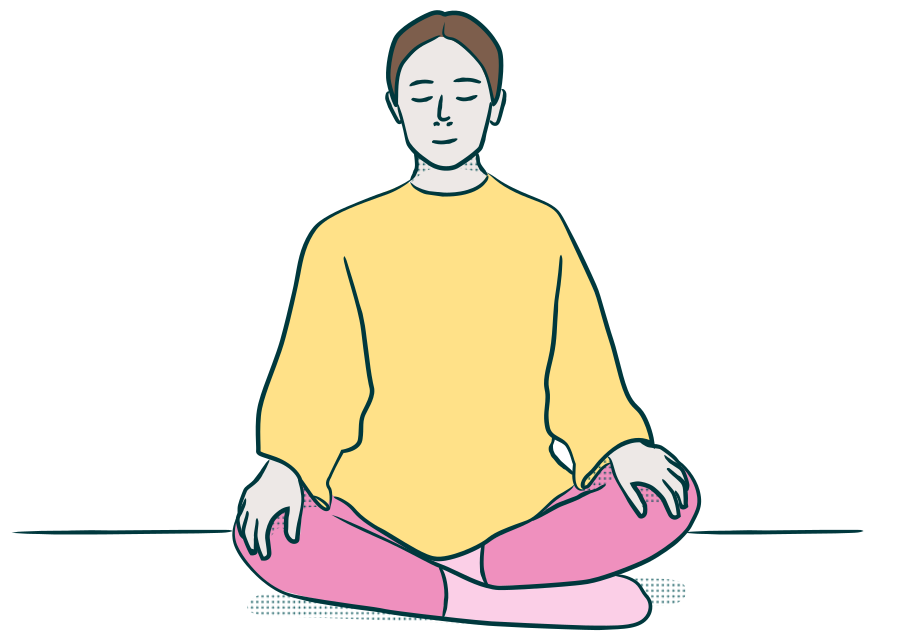
How to help your body settle
Even though the stress response works automatically, there are things you can do to help your mind and body return to a calmer state.
You can try:
- taking slow breaths, with longer exhales than inhales
- sitting in a comfortable position and noticing your feet on the floor
- stepping outside for some fresh air
- placing a hand on your chest or stomach and noticing the movement of your breath
- doing a gentle stretch to release tension
- saying to yourself that what you are feeling is understandable.
These small steps help your nervous system soften and settle.
Reaching out for support
If stress is affecting your sleep, relationships, work, or daily life, it is a good idea to reach out for support. There are people who can help you understand what you are going through and find ways to feel more stable.
You can speak with someone you trust, talk to your GP, call the Medicare Mental Health phone service or visit a Medicare Mental Health Centre.
If you are feeling suicidal, or are in danger, please call 000 or go to your nearest emergency department.
You never have to face these feelings alone.

Want more personalised guidance?
Explore our free digital programs, based on a proven approach to help people experiencing low levels of anxiety, stress or general concerns about their mental wellbeing.
You can progress through our evidence-based digital programs either with support from a qualified mental health practitioner (practitioner-guided), or independently (self-guided).
You deserve to feel understood and supported
Feeling overwhelmed does not mean you are failing. It means you have been carrying more than your mind and body can comfortably hold. With kindness, knowledge and support, stress becomes something you can understand and work with rather than something you have to fear.