About the program: Sleeping well
A proven Cognitive Behavioural Therapy (CBT) approach to help you overcome sleep difficulties.
Program:
Series of stages completed online through our Medicare Mental Health Check In platform
Duration:
Spread over about 6 weeks, with an extension option if needed
Format:
Practitioner-guided or Self-guided
How this program can help
Having trouble with your sleep from time to time is common, especially when life feels stressful. But when sleep issues start to affect how you feel, your energy, concentration, or ability to cope day to day, it may be a sign that your sleep system is under strain.
With kindness, support, and small steps, your sleep can begin to settle again. You deserve rest, and there is help available if you need it.
This program offers practical, evidence-based strategies to help you sleep better and feel more like yourself again. It is based on established clinical guidelines.
Program outline
What's included
Story-based stages that teach core coping skills
Exercises designed to help you tackle your symptoms
Practical action plans to apply your new skills in daily life
Email reminders to keep you on track
Questionnaires to help you monitor your wellbeing
Access to sleep diary tracking.


Skills you could gain
Identifying unhelpful behaviours and habits: recognising unhelpful patterns that influence our ability to get restful sleep.
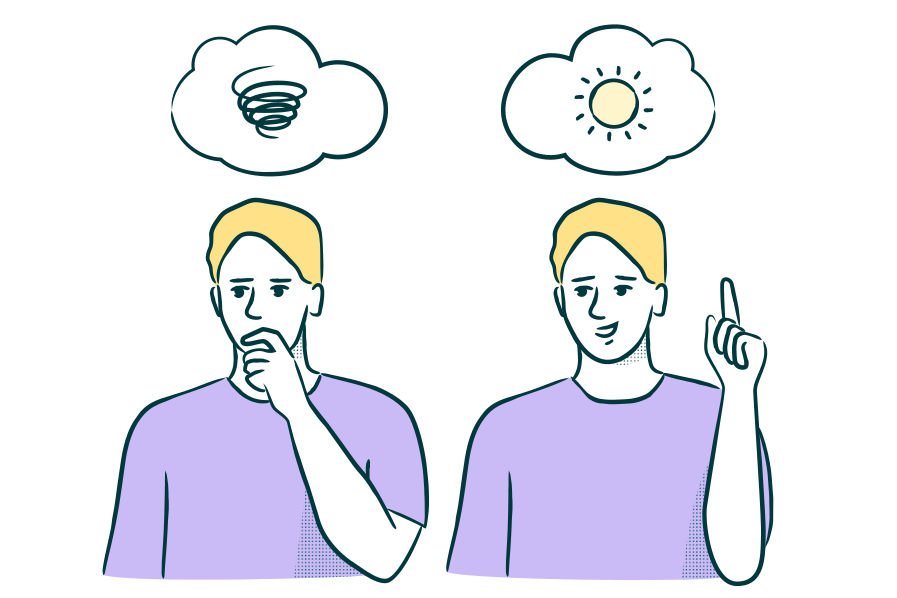
Thought restructuring/reframing: challenging and replacing assumptions regarding your sleep to create better habits.
Coping mechanisms: using practical tools and techniques to get out of the unhelpful sleep cycle.
Self-awareness and self-monitoring: understanding how emotions, thoughts, feelings, and actions connect.
Practitioner-guided versus self-guided pathways
You can choose to do the program independently, or with guidance from a Medicare Mental Health Check In practitioner. Take a look at the differences between these pathways below.
| Practitioner-guided | Self-guided | |
|---|---|---|
| Program choice | Determined with your practitioner | Determined by you |
| Support | Check-ins with your practitioner | Fully self-directed |
| Who it's for | Mild symptoms, those wanting support with applying the skills in their day-to-day lives | Mild symptoms, those who are able to gradually apply the skills in their day-to-day lives |
| Program choice | ||
| Practitioner-guided Determined with your practitioner | ||
| Self-guided Determined by you | ||
| Support | ||
| Practitioner-guided Check-ins with your practitioner | ||
| Self-guided Fully self-directed | ||
| Who it's for | ||
| Practitioner-guided Mild symptoms, those wanting support with applying the skills in their day-to-day lives | ||
| Self-guided Mild symptoms, those who are able to gradually apply the skills in their day-to-day lives |
Is this for me?
This program may be right for you if you are looking for support on your wellbeing journey and want to be in control of how and when you receive that support.
This program is suitable for people who:
- are over 16
- want to try a low-impact approach to improving their mental health.
This program is not suitable for people who:
- are under 16
- require help for more acute or complex mental health needs
- are in need of urgent care.
What’s next?
Find out if this service is the right fit for you by calling Medicare Mental Health.