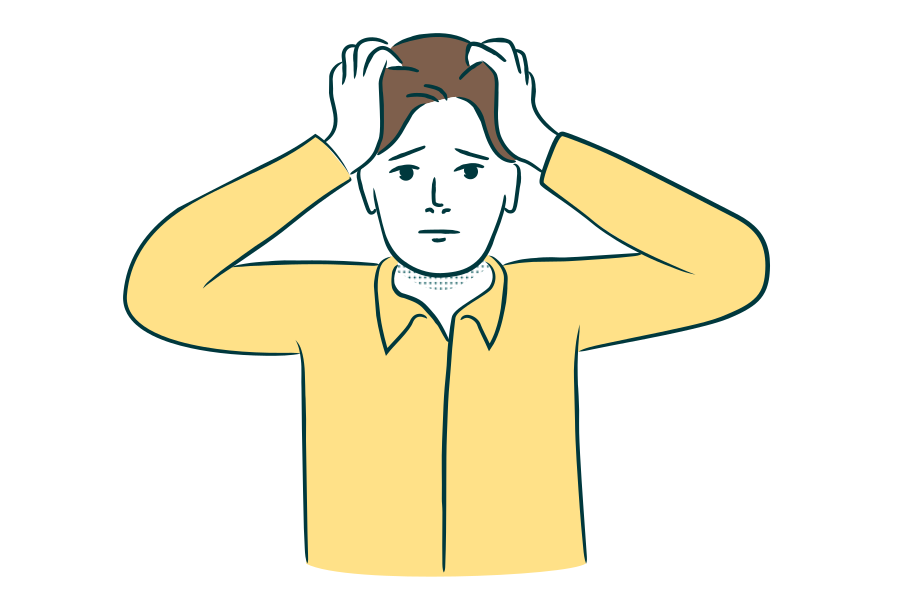
About the program: Facing your fears
A proven Low-intensity Cognitive Behavioural Therapy (LiCBT) approach to help you overcome excessive fears.
Program:
Series of stages completed online through our Medicare Mental Health Check In platform
Duration:
Spread over about 6 weeks, with an extension option if needed
Format:
Practitioner-guided or Self-guided
How this program can help
Fear and anxiety are normal, healthy emotions. People can experience fear about many different things. Fear can be helpful and is a natural response to a stressful or dangerous situation. But some fears can be excessive. They last a while, are constant, feel distressing, and stop you from doing things that you want to do.
This program focuses on avoidance that is driven by fear that is excessive. It guides you through a technique proven to help people overcome excessive fears. Over time, this technique can help you gain control over fears that might be holding you back and stopping you from living the life you want. It is based on established clinical guidelines.
Program outline
What's included
Story-based stages that teach core coping skills
Exercises designed to help you manage your wellbeing
Practical techniques to help break the fear-avoidance cycle
Email reminders to keep you on track
Questionnaires to help you monitor your wellbeing.


Skills you could gain
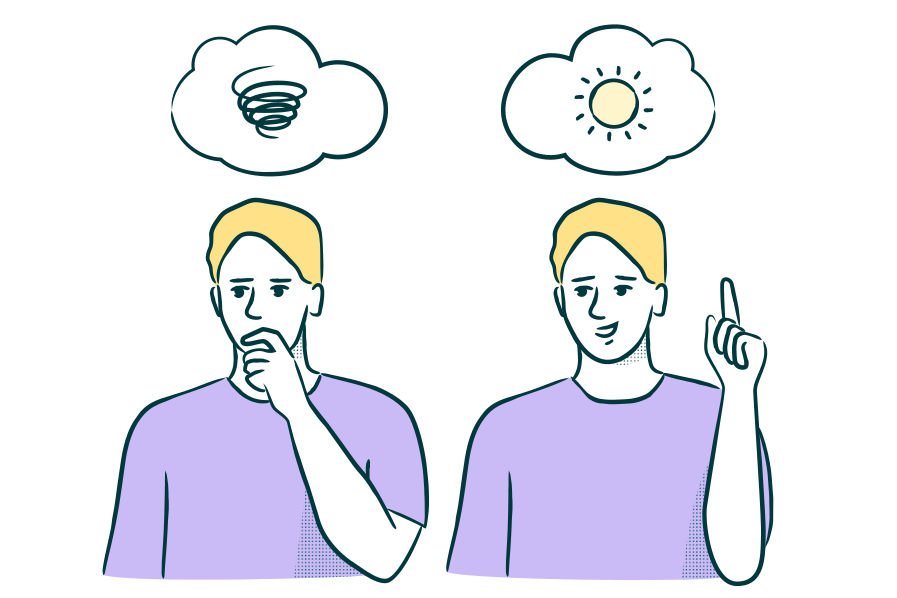
Identifying unhelpful thoughts and beliefs: recognising unhelpful thinking patterns that influence feelings, emotions, and behaviour.
Thought restructuring or reframing: understanding the patterns that reinforce your fears.
Emotional regulation: managing strong emotions in healthier, more effective ways.
Coping mechanisms: using practical techniques to gradually face your fears in a supported way.
Self-awareness and self-monitoring: understanding how emotions, thoughts, feelings, and actions connect.
Practitioner-guided versus self-guided pathways
You can choose to do the program independently, or with guidance from a Medicare Mental Health Check In practitioner. Take a look at the differences between these pathways below.
| Practitioner-guided | Self-guided | |
|---|---|---|
| Program choice | Determined with your practitioner | Determined by you |
| Support | Check-ins with your practitioner | Fully self-directed |
| Who it's for | Mild symptoms, those wanting support with applying the skills in their day-to-day lives | Mild symptoms, those who would prefer to independently and gradually apply the skills in their day-to-day lives |
| Program choice | ||
| Practitioner-guided Determined with your practitioner | ||
| Self-guided Determined by you | ||
| Support | ||
| Practitioner-guided Check-ins with your practitioner | ||
| Self-guided Fully self-directed | ||
| Who it's for | ||
| Practitioner-guided Mild symptoms, those wanting support with applying the skills in their day-to-day lives | ||
| Self-guided Mild symptoms, those who would prefer to independently and gradually apply the skills in their day-to-day lives |
Is this for me?
This program may be right for you if you are looking for support on your wellbeing journey and want to be in control of how and when you receive that support.
This program is suitable for people who:
- are 16 and over
- want to try a low-intensity approach to improving their mental health.
This program is not suitable for people who:
- are under 16
- require help for more acute or complex mental health needs
- are in need of urgent care.
What’s next?
Find out if this service is the right fit for you by calling Medicare Mental Health.