How we use CBT in our programs
Medicare Mental Health Check In is a free Australian Government service that offers early support for people starting to experience mental health challenges such as stress, worry, or low mood.
This support is delivered through evidence-based resources and online programs designed to help you build practical skills to manage these challenges. The programs use a safe, evidence-based approach called Low-intensity Cognitive Behavioural Therapy (LiCBT).
Each of the 6 programs focuses on helpful, structured strategies you can apply in everyday life, with support available from a qualified mental health practitioner if you choose.
What is Cognitive Behavioural Therapy (CBT)?
Cognitive Behavioural Therapy (CBT) is a time-limited, structured, skills-based psychological therapy that looks at how different parts of your experience are connected, including your:
- thoughts (cognitions)
- behaviours
- physical sensations
- emotions.
CBT helps you understand how these areas influence each other and teaches practical ways to shift unhelpful patterns. It’s one of the most widely used and well-researched therapies, with strong evidence supporting its effectiveness for anxiety, depression, and related mental health disorders.
CBT is also recommended as a front-line treatment approach in Australian clinical guidelines for the management of anxiety and depressive disorders.
What is Low-intensity CBT (LiCBT)?
Traditional forms of CBT can be considered ‘high intensity’ because they are commonly delivered in 10+ weekly sessions of 50–60 minutes by clinicians trained in CBT such as registered or clinical psychologists. While effective, this kind of support isn’t always easy to access due to wait times, cost, location, or time commitments.
LiCBT is a brief, structured, and guided self‑help version of CBT that can address these barriers. It is designed for people experiencing mild to moderate symptoms of anxiety and depression. It focuses on a few key evidence‑based CBT strategies, such as how behaviours influence emotions, worry management, and problem‑solving. It is delivered through short sessions, workbooks, or digital tools.
LiCBT is typically delivered with support and guidance from practitioners (practitioner-guided) within a stepped care model, with a focus on skill‑building, self‑management, and early intervention.
How LiCBT can help
LiCBT is focused on small, practical changes that can make a meaningful difference over time. It’s designed to help with common challenges such as:
- anxiety and worry
- low mood or depression
- stress and difficulty coping.
Across the programs, you might learn how to:
- interrupt worry or overthinking
- gradually face situations you've been avoiding
- build simple routines that support your wellbeing
- break tasks into smaller, more manageable steps.
These strategies are designed to help you feel more in control and build confidence in managing your mental health.
LiCBT helps people take action before problems become more overwhelming.
How the programs are structured
All 6 Medicare Mental Health Check In LiCBT programs are delivered in a structured, easy-to-follow way.
The programs that are currently available are:
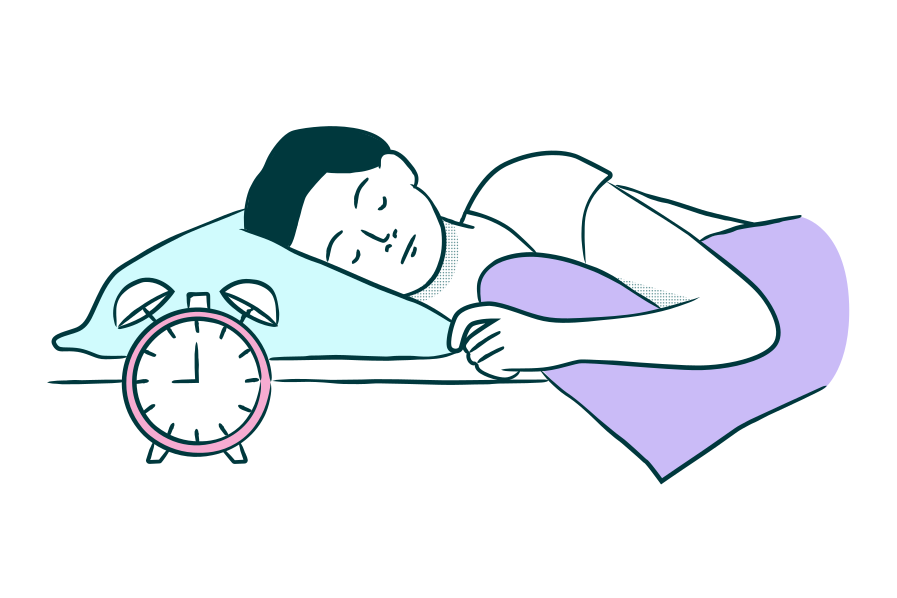
- Sleeping well
- Lift your low mood
- Managing your worries
- Facing your fears
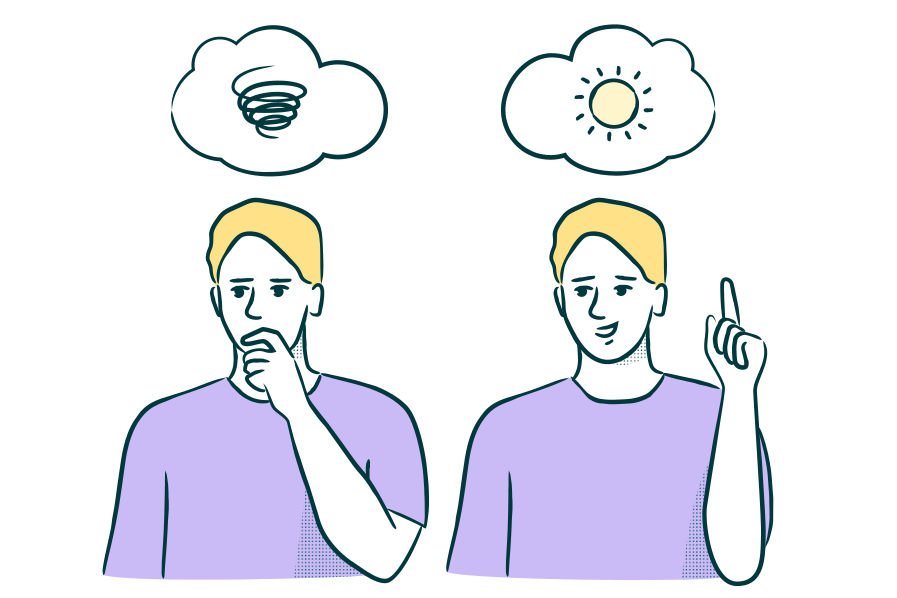
- Balanced thinking
- From problems to solutions
Each program takes around 6 weeks to complete and is delivered through a secure online portal.
You'll work through:
- practical, evidence-based strategies
- structured self-help resources such as exercises and worksheets
- tools and strategies you can apply in everyday life.
Different ways to work through a program
There are two ways to work through a program: practitioner-guided or self-guided.
The practitioner-guided pathway provides ongoing support and structure. While you work on your program, a practitioner will:
- check in with you regularly (via telehealth – over phone or video)
- help you stay on track
- support you in applying the strategies to your own situation.
Support sessions are brief and focused, helping you get the most out of the program.
The self-guided pathway offers independence and flexibility. You work through the program at your own pace with the option to connect with a practitioner, at any time in the program, if you’d like additional support.

People often ask
Learn more about the programs
We have helpful information about each of our programs and how to access them.